When Drupal Makes Sense (And When It Doesn't)
The CMS market is huge. You've got big enterprise players like Adobe Experience Manager charging $200k+ a year, headless platforms like Contentful that seem affordable until you hit scale, and the accessible end where WordPress and Webflow dominate. Every sales team will tell you their solution is perfect for your needs. I'm not here to declare Drupal the winner - I'm here to help you figure out when it actually makes sense.
The questions you need to ask aren't about current features or pricing. They're about what happens when your needs change (and they will). How fast is your industry moving? What will AI do to your content strategy in 18 months? Can you afford to be locked to a vendor's roadmap? If your answers are "not much," "not sure," and "yes" - you probably don't need Drupal. But if change is constant and flexibility matters, let's talk.
The Current Landscape
Enterprise SaaS (big players, big budgets) platforms like Contentful and Sanity look accessible until you scale. Contentful's free tier gives you 5 users and 1M API calls. If you need more, premium starts at $60k/year and enterprise at $140k+. These platforms are incredibly powerful and work great for companies with deep pockets and want heavy hand holding but your success becomes their pricing lever - more content, more traffic, higher bills.
Modern open source options like Payload and Strapi are brilliant for developer-first teams, but the ecosystems are smaller. Finding specialists outside major tech hubs gets tricky. WordPress and Webflow are fantastic until you hit their ceilings - plugin sprawl, visual builder constraints, migration nightmares when you outgrow them.
Drupal sits in this interesting middle ground. Enterprise-capable without enterprise pricing. Flexible without being unopinionated. Open source with real community governance. It does however require investment/architecture to get right. Do it properly and you have a platform that evolves with you for a decade but get it wrong and you've created the "Messy Drupal" that haunts decision-makers' memories.
Enter Drupal Canvas, AI and Drupal CMS.
Canvas: The Marketing Powerhouse
Drupal Canvas, shipping as the default in Drupal CMS 2.0, addresses the historical complaint head-on: Drupal is powerful but hard to use. Canvas is a visual, component-based page builder with native AI integration. Marketing teams can create landing pages entirely through the browser - drag, drop, configure, preview. No Drupal theming knowledge required.
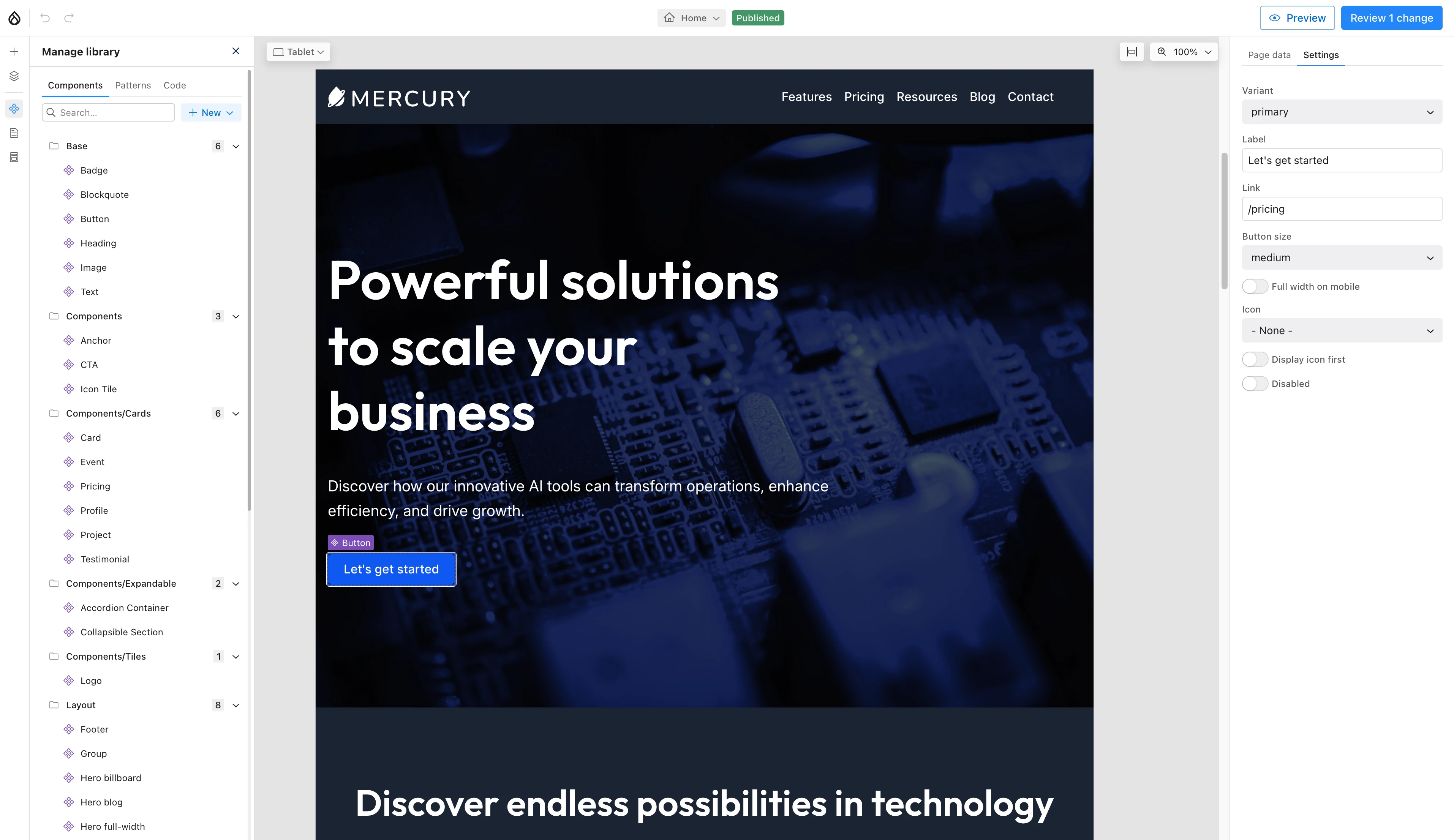
Before Canvas, "build me a landing page for next week's campaign" meant developer sprint, QA, deployment pipeline. With Canvas, marketing does it themselves in an afternoon using brand-approved components. But here's what makes it different from Webflow or WordPress's block editor: the underlying architecture stays enterprise-grade. Developers create components using proper Single Directory Components. Marketers compose pages from those components.
The AI integration goes beyond content generation. You can generate complete designed pages from natural language prompts. The Context Control Center lets you define brand voice, target audiences, key messages in one place - all AI agents draw from this source of truth. Update a product price in the center and agents automatically find every instance across your site and propose updates for review. It's the kind of thing that makes you realize how much time we've been wasting on manual updates.
Structured Content: Your AI Moat
Drupal is brilliant at data structuring. This has been a conscious effort by the community and with the advent of AI, has really unleashed capabilities. Dries Buytaert (Founder of Drupal) put it perfectly: "Ten years later those decisions (to heavily structure data) gave Drupal an unexpected advantage in today's AI-driven web. The architecture we created is exactly what AI systems need."
WordPress and Webflow treat content as pages. AI has to "figure out" what your content means. Drupal treats content as structured data. Fields like product_benefits, use_cases, pricing are explicitly defined. When a customer asks an AI assistant "What are the benefits of your enterprise plan?", Drupal pulls exactly the right fields and delivers a contextually accurate response. Traditional CMS? AI grabs a vague paragraph that might be outdated.
As AI-generated answers become the primary way people find information, structured content determines whether you appear in those answers. The platforms built around structured data - Drupal chief among them - are already positioned. The ones treating content as pages will struggle. You can see from this blog post that AI is now more than even looking for better quality/structured content.
The Vendor Lock-In Reality
I am a huge believer of Open Source so I might be a bit biased. SaaS CMS platforms are a cost per success platform with pricing that changes with content volume, traffic spikes, users etc. If the vendor decides AI features need enterprise tier, you don't have many options but to pay or you don't get them. With Drupal, licensing is $0. So when your content volume grows, hosting costs increase only marginally. If traffic spikes, CDN costs increase predictably. Community releases AI features and you get them.
Government and enterprise buyers increasingly care about where their content lives. SaaS platforms store content on vendor servers, subject to their terms and jurisdiction. Drupal runs on your infrastructure, your control, your jurisdiction. Australia and the UK are heavy in this. GovCMS exists in Australia, LocalGov Drupal exists in the UK, and why governments worldwide choose Drupal. The ManageMyHealth incident really sheds light on security implications now more than ever with focus on data sovereignty.
When Requirements Change (And They Will)
More than 70% of businesses report technical debt is significantly impeding innovation. Every CMS choice creates constraints. The question is what happens when your needs exceed those constraints?
WordPress has a natural ceiling that looks something like the following. You start with a blog/some generate pages that now needs complex product catalogue with variants. Granular permissions for 30+ editors come into play and then plugin sprawl creating security vulnerabilities faster than you can patch. For Webflow, the visual builder is great, but some custom business logic is needed. Requirements diverged from Webflow's assumptions and becomes more expensive with scale as you are locked into their ecosystem.
Drupal's higher upfront investment buys flexibility. Entity system lets you define any content type with any fields and relationships. 50,000+ modules for common requirements. API-first means it works as traditional CMS, headless, or hybrid. The cost up front is higher of course but it also equals lower change costs over time and better long-term ROI for evolving requirements.
AI is Moving Fast
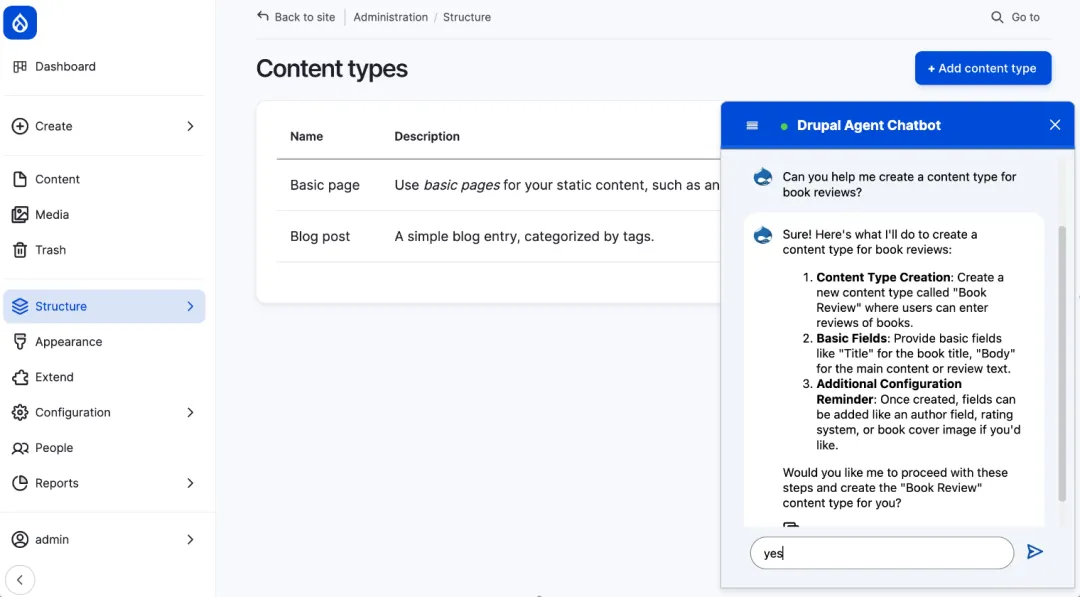
AI capabilities are changing monthly. Any CMS choice today needs to account for AI capabilities that don't exist yet. SaaS platforms decide which AI providers to integrate, decide pricing for AI features, and their roadmap may not align with your needs. Open source allows Integration with any AI provider via APIs. Community builds integrations for popular services and can switch AI providers without changing CMS.
The Drupal community is investing $1M in AI capabilities - Canvas AI Assistant, Orchestration module, Context Control Center, MCP integration. The vision positions Drupal as the central orchestration brain for a composable enterprise. For practical examples of what's possible today, check out our guide on AI quick wins for Drupal.
The Honest Decision Framework
Choose Drupal when changing requirements are certain, AI is strategic, marketing independence matters but you still need architectural control, vendor lock-in is a risk, and multi-channel is real or coming. Your industry is evolving, your content strategy will expand, what you need in 3 years is different from today. You want to integrate AI capabilities deeply without being locked to one vendor's roadmap. Marketers need to create landing pages without developer sprints, but you still need that architectural control.
Choose WordPress or Webflow when requirements are stable and simple - basic marketing site, 50 pages. When it's pure e-commerce and content is secondary - Shopify wins here. If you have a big budget and want full handholding, an enterprise SaaS sounds like the way to go.
Conclusion
There is no universally "best" CMS. Anyone who tells you otherwise is selling something. Drupal excels at complex, long-term, evolving requirements. With the advent of DrupalCMS, the upfront costs have come down a lot but the upfront investment that buys flexibility will still be reasonable. For the right projects, nothing else comes close. For simpler projects with tighter budgets and shorter horizons, that investment isn't justified. A well-implemented WordPress or Webflow site will serve you better than an over-engineered Drupal build.
The key is honest assessment of your actual needs - not the needs you imagine you might have someday, and not the artificially constrained needs that fit a predetermined budget. What do you actually need to build, maintain, and evolve over the realistic life of this platform? With AI, I am incline to lean on a more flexible and agile approach but that can only be determined case by case.
Evaluating CMS platforms for a complex project? We help organisations across New Zealand navigate these decisions with clear eyes and honest assessments. Reach out to discuss your specific situation - whether Drupal is the right fit or not.
Get the newsletter
Drupal insights and client stories, delivered fortnightly. No spam, unsubscribe anytime.